
The Best Volume Is The One You'll Keep Doing

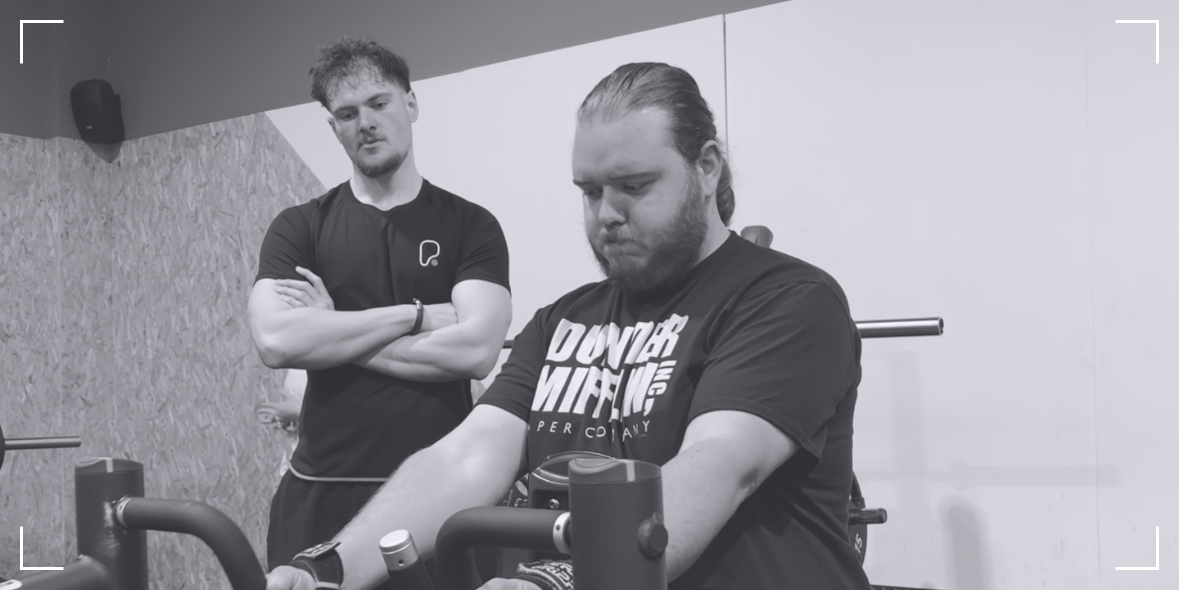
This is the first piece I've ever published on something I have a passion for and a career in, so this is the way I want it read. Everything stated below comes from my years of experience coaching clients and testing on myself. And the current research genuinely backs and supports it. That's what gives me the confidence to publish this.
But confidence isn't the same as finished. As time keeps flowing, so will the science and research into this topic, so please question and push back on what I say. This is me showing my current working, not my final commandments that you should follow.
Here is the working. Ask ten lifters how much volume they should do per week and you'll receive ten confident, contradictory answers. The truth is much less gripping than one clean number, and far more useful for it: this is more varied than the internet would like you to believe and preach. Get your volume into a sensible range, take those sets close to failure, and train in a way that you love and can consistently stick to, without destroying your joints chasing numbers that work against your goal. Do that, and you'll grow.
What Volume Actually Is.
Before I even push my current evaluation of how much volume you should use, or experiment with yourself, we should talk about what volume even is, because the word gets used in a few different ways. Some people use tonnage: sets times reps times weight. Which sounds relevant in theory, but rewards the wrong behaviour. Bring in partials or cheat reps, for example, and the tonnage climbs further without accurately showing what your target muscle is actually capable of.
The aspect worth tracking is much simpler: hard, true sets per muscle per week. A hard set is a working set taken somewhere close to, or all the way to, failure. Not the warm-ups, not half-effort work, and not deload work when we're talking hypertrophy. Count those hard sets across the week, per muscle group, and you have a number you can actually steer and progress from effectively. It's also the unit most research currently uses, which makes it easy to hold your own training up against the evidence.
More Volume Does Mean More Growth
Up to a point
More hard sets tend to mean more muscle growth (Pelland 2024, 67 studies), with growth continuing to climb as weekly volume climbs. Volume genuinely matters, and anyone arguing against that is ignoring a lot of data.
But the returns drop off fast, and this is the caveat. Most of the hypertrophic window sits somewhere around 12 to 20 hard sets per muscle per week. Past that, fatigue builds up significantly while the growth gives back less and less, and you pay for it with extended recovery.
So the takeaway is this: volume is a range, not a single number. Get yourself into the best window you can, with training you can keep consistent across your mesocycles. Chase an exact number week by week and you're mostly just buying yourself fatigue you might not even need.
What Matters More Than the Number
Individualism is what is going to decide where your volume range is How much effort you can keep consistent. Specifically, can you get to, or close to, failure in the reps you've set out? That's the lever that matters most, not the exact set number, because a set doesn't count for much if you can't reach those reps with real effort.
Although going to failure feels right, stopping just short has barely any more growth for most people with the systemic fatigue you rack up getting there (Grgic 2021 / Refalo 2023). Growth tends to be best at roughly 1 to 3 RIR, not necessarily at failure itself. And again, exactly where in that range will be dictated by the individual.
But there is a floor. Stopping too early is a poor use of the set and tends to become junk volume: leave more than 4 to 5 reps in the tank and growth starts to drop, and by 6 to 7 reps short you're doing very little to the muscle at all.
And there is a ceiling, because going too hard has a cost. Training right up against failure is linked to slightly worse strength gains and more fatigue and soreness for a day or two (Robinson 2024). So max effort on every set isn't free.
Takeaway: take your hard sets to roughly 1 to 3 reps short of failure. Close enough to grow, but far enough back that you can truly recover. True failure is a tool for specific moments, like a peak week when you know a deload, active rest or travel is coming and you can only fit so much volume into a short window.
How I Actually Programme It.
Everything up to here can be tested in a lab. The next two things mostly can't, and I think they matter more than any set count.
The first is consistency. A programme only works if it actually gets done, week after week, for years. The best-designed twenty-set block on paper loses every time to a twelve-set one you truly put your sweat and tears into, day after day. This is the bit spreadsheets miss: the "optimal" plan you walk away from in a couple of months is worse than the "good enough" plan you're still running next year. So when I build training, I weigh someone's preferences too, so it fits around their life. That doesn't mean never pushing them out of their comfort zone, because there are sacrifices that have to be made for a goal, but it means keeping them mentally and physically in check while they do. Consistency is what turns a plan into a physique. Nobody has ever out-trained a routine they quietly stopped following.
The second is your joints, and how long your body can keep taking the work. Growth is a decade-long project, not an eight or twelve-week study. You can force high volumes and constant near-failure training for a while, but tendons and joints keep the receipts. So I pick exercises that load the muscle without punishing the connective tissue, I rotate movements when something starts to niggle, and I treat longevity as part of the programme, not something separate from it. A set you can't repeat next week because your joint is flared up isn't stimulus, it's a cost you could be paying later.
And this is where individuals differ massively. Some people are simply built different, with stronger joints and connective tissue, and they can handle far more hard, heavy volume than the next person without complaint. Others feel it far sooner. Neither is wrong, it's just who you are, and it's a huge part of why a set number that suits one lifter quietly wrecks another. You have to programme for the body you've got, not the one in the study.
I want to be straight that neither of these has a clean meta-analysis behind it. But I've coached enough people, and put enough years into my own training, to trust that they decide more outcomes than the gap between fifteen and eighteen sets ever will. If the science sharpens this up down the line, I'll happily update. For now, this is judgement earned from experience, and I can't wait to learn more.
Theory is cheap, so let me show you the block I'm running on myself right now, live, with everything above baked into it.
It's a five-week accumulation phase, built around chest and back width as the priority muscles. Chest gets 18 hard sets across the week, split over two sessions: an incline-led push on Monday and a flat-led one on Thursday. Back width gets 16, split across a vertical-pulling day and a horizontal-pulling day. You can see the earlier principles sitting right there in the layout: every muscle trained twice a week, and the volume parked inside that 12 to 20 range rather than chased past it.
The part that matters most is how it moves. Week one starts deliberately light, around 3 RIR, and honestly the only job that week is finding my true working weights. From there the volume creeps up week to week and the RIR comes down, so by week four I'm running the most sets of the whole block at the closest proximity to failure. That's the peak. Then week five is a deload. I've spent four weeks piling up fatigue, and simple as it is, I love hard training but I'm not blessed with strong elbow joints, so a deload isn't optional for me. That said, I do adapt: if I'm still running strong I'll push it, the same way I might with a more advanced or late-intermediate client.
How I run this changes completely depending on who's in front of me. With a beginner, the main focus is form, and I almost never send them to true failure. The only time they hit it is by accident, usually while we're finding a starting weight on a machine where failing is safe. They get more than enough stimulus stopping a few reps short, and they get it without the extreme soreness, bar the first couple of sessions, and without the joint stress they often can't recognise in themselves yet. From there it's usually as simple as adding 2.5kg each session. With an intermediate, I autoregulate more. I care less about a perfect plan on paper and more about pointing them in a direction to test and experiment with what they can handle, feeding the curiosity they hold to progress toward their original goal, or a new one.
And I log all of it: weight, reps and RIR, every single set. Not because the numbers are sacred, but because they're the only honest way to see whether the ramp is really happening, and to truly progress.
Closing Outcome
I'm confident in this way of training, both for myself and for the clients I coach, because the current data supports it and my experience backs it. But with time, like everything, it will advance, and so will I, as a coach and in my passion for bodybuilding. That only means progress to come, even if that progress ends up going completely against what I currently preach. Especially for individuals who suffer from joint and tissue problems, or people who simply don't have it in them to train five or six times a week to maximise their progress. That's exactly why I lean on the experience of my current self and my clients, not just the numbers.
So please, challenge me, or educate me. If there's something you've read that I've yet to open my mind to, or something you've experienced yourself with the clients you coach and in your own training, I want to hear it.
Get a mesocycle or a plan you can keep consistent for years, not three months. Sit yourself in that 12 to 20 set range for each muscle group where you can, train close to failure, or all the way to it if you're blessed to, with a variety of movements. And train hard.
References
- Pelland JC, et al. The Resistance Training Dose Response: Meta-Regressions Exploring the Effects of Weekly Volume and Frequency on Muscle Hypertrophy and Strength Gains. Sports Medicine. 2024. https://pubmed.ncbi.nlm.nih.gov/41343037/
- Grgic J, Schoenfeld BJ, Orazem J, Sabol F. Effects of resistance training performed to repetition failure or non-failure on muscular strength and hypertrophy: A systematic review and meta-analysis. Journal of Sport and Health Science. 2021. https://pubmed.ncbi.nlm.nih.gov/33497853/
- Refalo MC, Helms ER, Trexler ET, Hamilton DL, Fyfe JJ. Influence of Resistance Training Proximity-to-Failure on Skeletal Muscle Hypertrophy: A Systematic Review with Meta-analysis. Sports Medicine. 2023. https://pubmed.ncbi.nlm.nih.gov/36334240/
- Robinson ZP, et al. Exploring the Dose-Response Relationship Between Estimated Resistance Training Proximity to Failure, Strength Gain, and Muscle Hypertrophy: A Series of Meta-Regressions. Sports Medicine. 2024. https://pubmed.ncbi.nlm.nih.gov/38970765/
